
-
 SHOPPING CART item - 0
| ISBN | 9789351250135 |
| Binding | Hard Bound |
| Pages | XVI, 110 |
| Year of Publication | 2014 |
| Language | Englsih |
| Size | 23 cms |
| Subject | Community Dev. , NGOs and Participatory Development , International Studies , Panchayati Raj , Political Science |
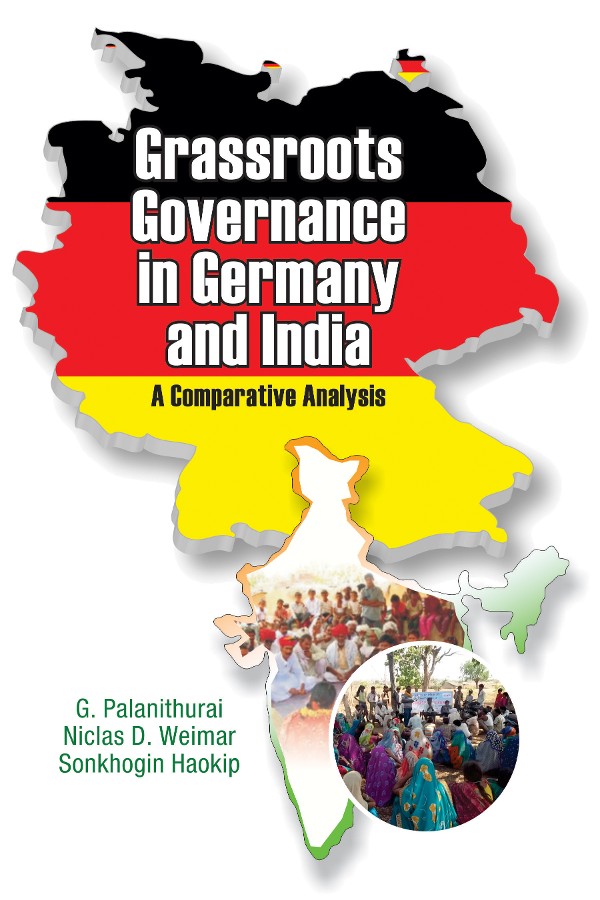
Local Governance assumes significance in the present context of globalization. It is important in the developing countries particularly in the Afro Asian countries. Because the present dispensation of decentralization of powers is meant for empowerment of the marginalized. The current wave of decentralization is to involve and engage the marginalized in governance and development activities. Local governance is seen as a tool and mechanism to achieve inclusive development and inclusive governance. In this context an attempt is made to compare the grassroots institution namely the lowest unit of governance in India and Germany. It is almost a comparison of working of Gram Panchayat in India and a equivalent unit in Germany. It has been done through a case analysis. It gives a picture about how a village life is organized and administered through an institutional mechanism. Less government more governance can be seen when ours is compared with the western countries.
G. Palanithurai, Former Professor, Rajiv Gandhi Chair for Panchayati Raj studies, Department of Political Science and Development Administration, Gandhigram Rural Institute – Deemed University, Gandhigram is an academic activist. All his academic, research and outreach activities are being supported by an array of funding agencies, namely the world Bank, UNDP, UNICEF, Hunger Project, SDC, DANIDA, Action Aid International, Ford Foundation, Population Foundation of India, Rajiv Gandhi Foundation, Toolkit Foundation Netherland, Ministry of Panchayati Raj and State Planning Commission. He was a visiting professor in Cologne University, Germany. He has to his credit seventy three books, 126 research articles, 112 popular articles in popular newspapers, 83 monographs published in a span of three decades. He was and is member of many advisory committees of the Government of India and Government of Tamil Nadu pertinent to local governance and rural development.
Niclas D. Weimar is teaching assistant in the Department of Indology, Cologne University, Germany. He is consultant to many organizations for Solar Energy. He has to his credit four research articles and three books. He is pursuing research in Cologne University, Germany.
Sonkhogin Haokip is Assistant Professor in the Department of Political Science and Development Administration, Gandhigram Rural Institute. He is specializing in decentralization process in the North East India. He has to his credit three books and seven research articles. He is currently doing an ICSSR Project.