

-
 SHOPPING CART item - 0
| ISBN | 9789351250104 |
| Binding | Hard Bound |
| Pages | X, 110 |
| Year of Publication | 2014 |
| Language | English |
| Size | 23 cms |
| Subject | International Studies , Law , Political Science , Terrorism , Criminology and Police Science |
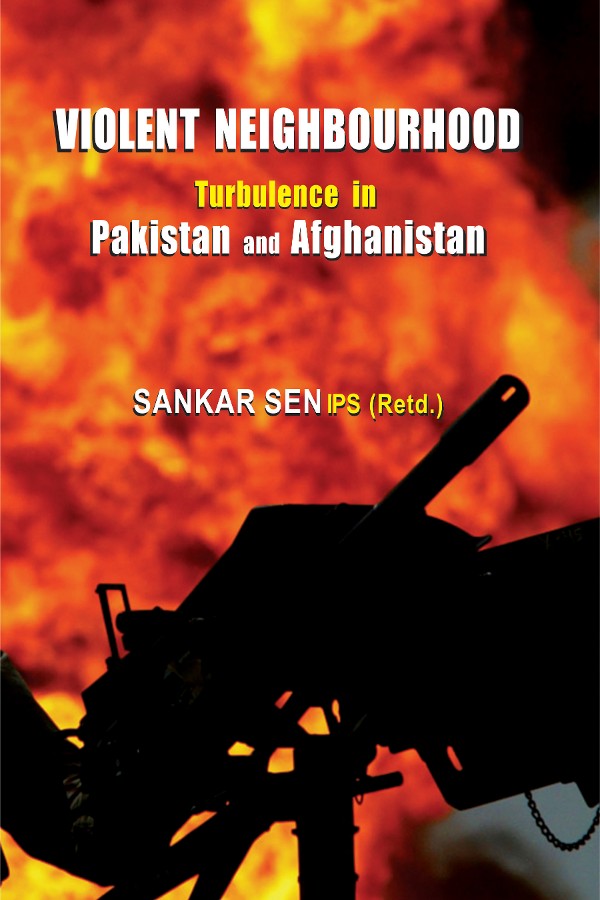
The book contains a number of articles on the turbulent situation in Afghanistan and Pakistan following the American war against the Taliban regime in Afghanistan after the cataclysmic events of 9/11. They throw revealing lights on different dimensions, and particularly lack of success, of the American war against terror in Afghanistan and the diabolical role of Pakistan in providing covert support to the Talibans while keeping up the pretence of alliance with America. Pakistan’s unconcealed support to the Jihadi terrorists to settle scores with India, besides posing threats to India’s security, has spawned uncontrollable chaos and lawlessness inside Pakistan and made it dysfunctional. America’s decision regarding withdrawal of its troops from Afghanistan after 2014, has compounded the situation and the future of that benighted country hangs in the balance. The publication will help clear assessment of the evolving complex situation in Pakistan and Afghanistan and their impact on Indian’s security.
Sankar Sen is a distinguished member of the Indian Police Service. He was the Director of National Police Academy, Hyderabad and Director General of the National Human Rights Commission. He was awarded the Police Medal for Meritorious Services and President's Medal for Distinguished Service. He has authored a number of books.
Shri Sen was deeply involved in the human rights sensitisation programmes for police and para-military forces and improvement of prison administration. A large number of his articles on police reforms, law enforcement and human rights have appeared in national dailies and magazines in India and abroad. Some of his publications include, Indian Police Today, Police in a Democratic Society, Trafficking in Women and Children and Enforcing Police Accountability through Civilian Oversight.


