

-
 SHOPPING CART item - 0
| ISBN | 9789355947475 |
| Binding | Hardbound |
| Pages | XXII, 250 |
| Year of Publication | 2024 |
| Language | English |
| Size | 23 cms |
| Subject | History , Islamic Studies , Religion |
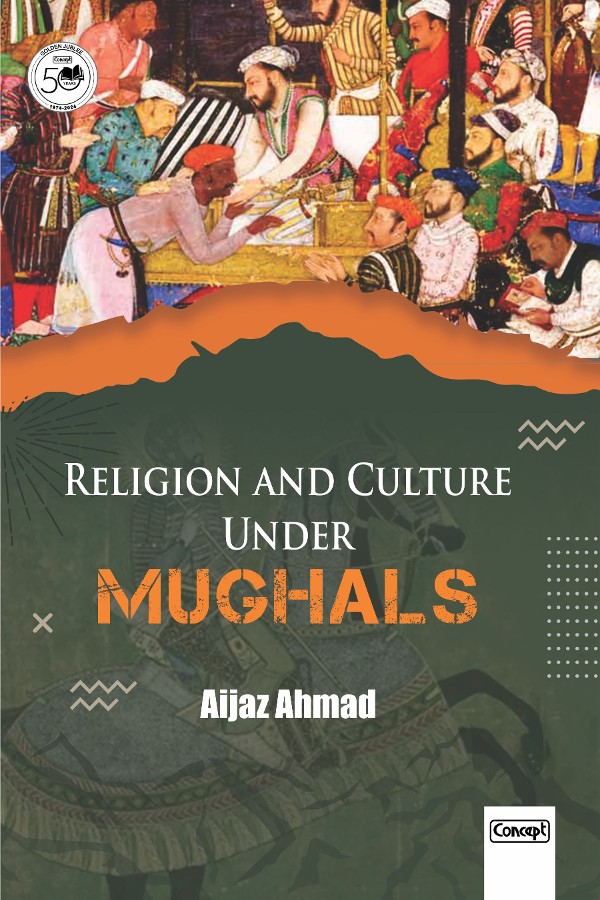
This book, Religion and Culture under Mughals is a humble effort to highlight the religious and cultural synthesis developed by the Mughal emperors in the diverse society of the Indian subcontinent. The Mughal Empire, which flourished from the early sixteenth to the early eighteenth centuries in the Indian subcontinent, played a significant role in shaping the religious and cultural landscape. Akbar implemented policies of religious inclusivity, seeking to integrate different religious communities into the imperial structure. While Babur was fond of natural beauty, learning and literature and warfare strategy, the other Mughal emperors, especially Akbar, Jahangir and Shah Jahan, were patrons of the arts and learning. Aurangzeb was also an empire-builder and encouraged harmony by appointing many Hindu Rajas to higher positions in the empire. However, his period remained disturbed due to the emergence of many local chiefs and some religious misunderstandings. The Mughal rulers left behind a legacy of magnificent buildings, including the Taj Mahal, Agra Fort and Red Fort in Delhi. They encouraged the translation of religious texts, the creation of illustrated manuscripts and the development of a rich cultural heritage.
Aijaz Ahmad is an Associate Professor in History and Principal of YMD College, Nuh, affiliated with Gurugram University, Gurugram. During his service career, he has published 23 research papers in many national and international journals. In the same period, Dr. Ahmad has published twelve books by many reputed publishers. His published books are: 1. Indian Muslims Against British Rule; 2. Sir Syed, Aligarh Muslim University and National Politics; 3. Mewati Rebellion of 1857; 4. Uprising of 1857; 5. History of Mewat; 6. Cultural Heritage of Mewat; 7. Poorv Aupniveshik Bharat Me Vigyaan Tatha Praudyogiki; 8. Triple Talaq; 9. Democracy and Discontent in India; 10. New Dimensions of Indian Historiography; 11. Scientific Development in Islamic Civilization; and 12. Religion and Culture under Mughals.


